



The right irrigation system is the one that fits the crop, field and available water—not the one with the most attractive headline saving. For projects in dry climates, an equipment list should begin with site measurements and an operating plan. Drip lines, sprinklers, centre pivots and pumps solve different parts of that plan.
Start with the field, not the brochure
FAO’s selection guidance makes soil, slope, climate, water quality and availability central to the decision. Strong winds can disturb sprinkler distribution. Soil infiltration and water-holding capacity affect application timing. Efficiency also depends on management, so changing the system alone does not establish how much water a particular farm will save.
Compare drip, sprinkler and centre-pivot systems
| System | What to investigate | What the quotation should explain |
|---|---|---|
| Drip | Plant spacing, root-zone layout and water cleanliness | Emitter layout, filtration, flushing and replacement parts |
| Sprinkler | Wind, spacing, application rate and available pressure | Distribution layout, nozzles and the pump operating point |
| Centre pivot | Field geometry, access, terrain and intended coverage | Machine layout, water distribution, control and service access |
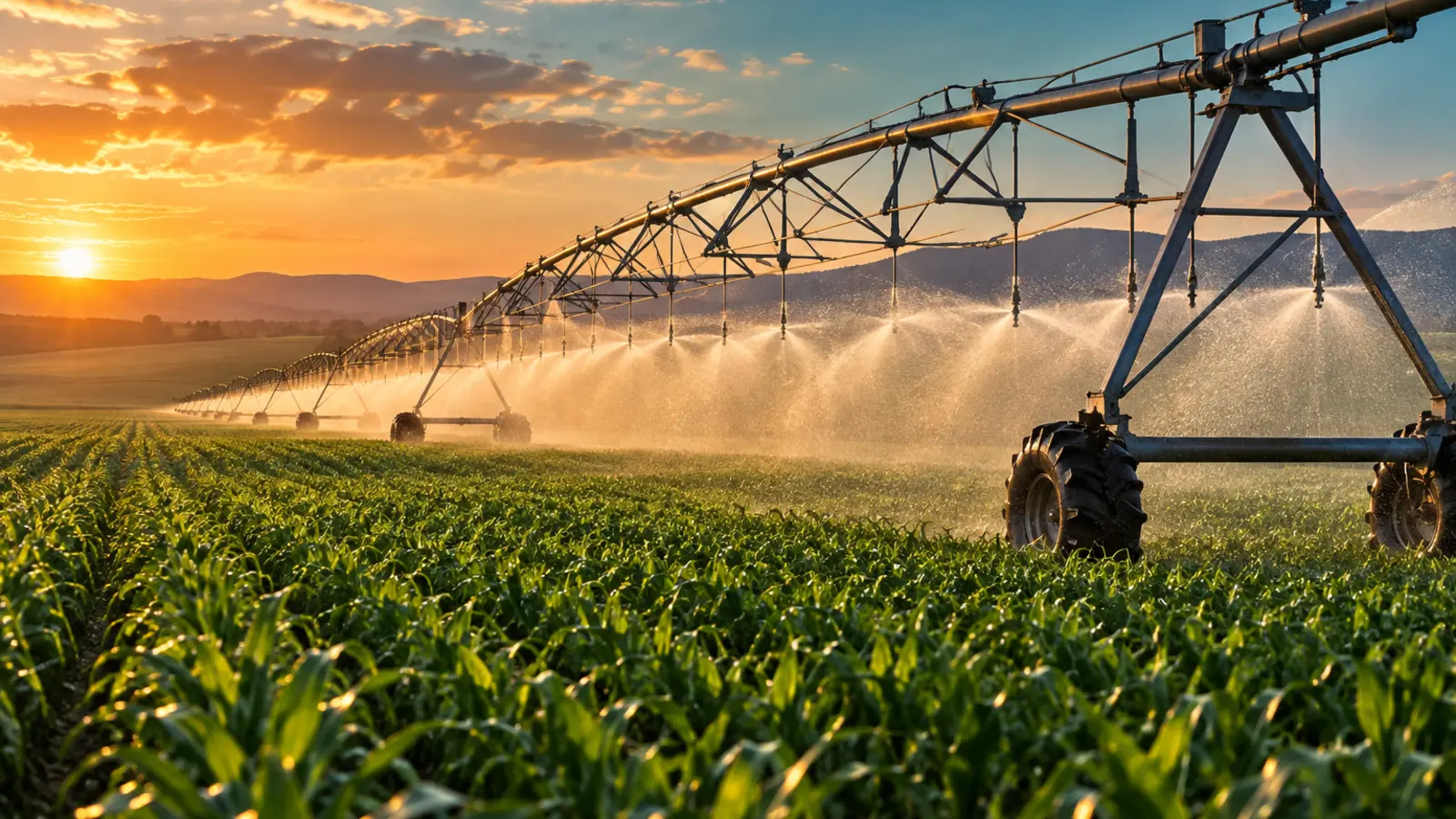
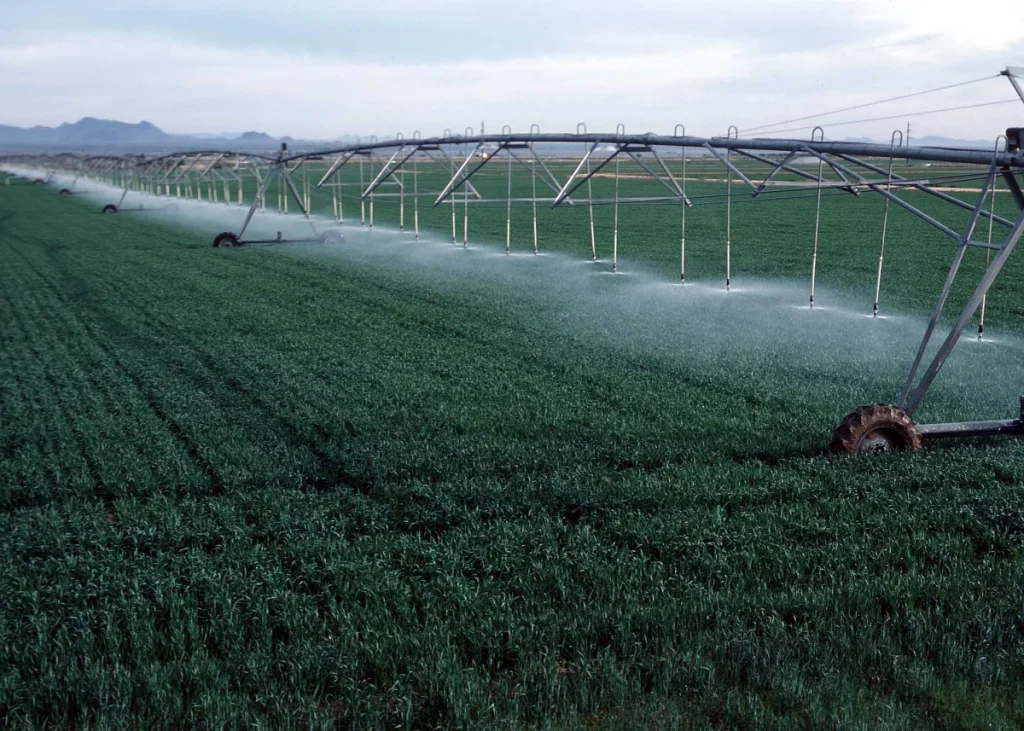
A centre pivot is a moving sprinkler system, not a separate guarantee of water savings. Compare a proposed layout against the actual field map. Irregular boundaries, obstacles or areas outside the planned coverage should be identified before purchasing the machine.
Water quality belongs in the equipment brief
FAO’s water-quality guidance describes physical particles, chemical deposits and biological growth as contributors to drip-emitter clogging. Partly blocked emitters can be harder to notice than fully blocked ones. A water analysis and an appropriate filtration and flushing design are therefore part of the project, rather than accessories to consider after installation.
Specify the pump and maintenance together
Request a pump selection against the required flow and total head, with the site’s operating conditions recorded in the offer. Ask how the proposed pump, pipework, filters and emitters or nozzles operate together. A model name alone is not a complete hydraulic design.
FAO’s arid-zone irrigation guidance emphasises regular supervision and access to spare parts for drip systems. Include inspection, cleaning and replacement arrangements in the operating plan. Assign responsibility for checking delivery across the field and recording changes over time.
Lower energy cost does not remove water limits
FAO’s irrigation-management overview notes both the potential of solar-powered pumping and the risk of greater groundwater abstraction when pumping becomes cheaper. Energy choice should sit alongside water allocation, monitoring and local water-resource rules.
Send these details before requesting a system
- Crop, planting pattern, irrigated area and a field plan.
- Water source, analysis, available supply and operating restrictions.
- Elevation differences, pipe route and the required flow and pressure.
- Power supply, seasonal schedule and daily operating hours.
- Who will operate the system and which spare parts can be stocked locally.
Use this as a starting brief for a site-specific design. Explore our irrigation equipment and greenhouse equipment, or send your project details. Final pump duty, filtration and coverage should be confirmed by the project’s irrigation designer.